
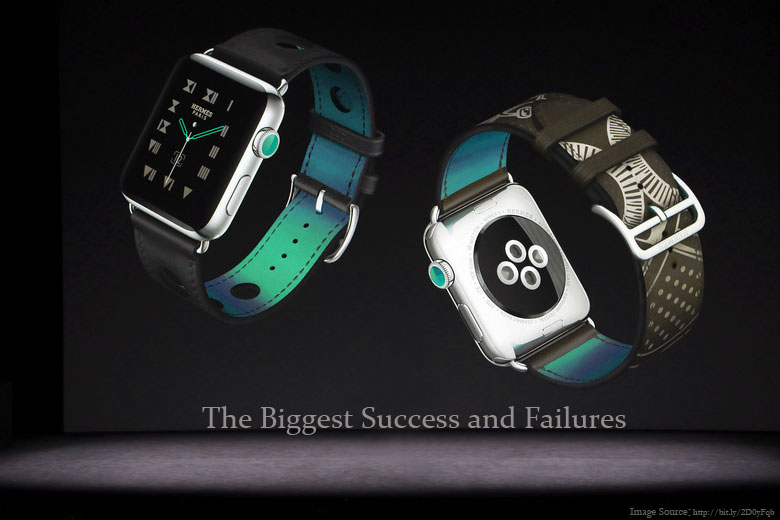
Let be honest: Technology this year was
one major "flop" after another. What's more, the greatest washout
from the majority of this was you.
It's anything but difficult to check
the ways that tech treated you terribly, particularly when it came to data security.
Then again, there was additionally a lot of good innovation this year that
functioned admirably and offered benefits for your cash.
So here's a survey of the tech in 2017
that required the most settling, and the tech that was really settled.
Tech
That Needed Fixing
Epic disappointments this year
uncovered your own information to programmers, squandered your cash on
superfluous or morally questionable items and nourished you falsehood.
Equifax
At the point when security ruptures
happen, you normally simply need to change your passwords or drop your charge
cards. Be that as it may, the current year's hacking of Equifax, one of the
three noteworthy shopper credit detailing offices, was uncommon.
Programmers abused a frail point in
site programming to access delicate data like Social Security numbers and
driver's permit numbers for upwards of 145 million Americans. What's more
terrible is that no one picked in to Equifax — on the off chance that you have
any credit, you are likely piece of the break and defenseless against data
fraud.
The aftermath will likely reason
cerebral pains for a considerable length of time. The best barrier strategy is
an issue: You should solidify your credit with each of the three credit
announcing offices — Equifax, Experian and TransUnion — on the grounds that a
character criminal could utilize your own data to apply for credit at a loan
specialist or organization that checks records with just a single of the
offices. Furthermore, solidifying your credit may require a little charge, and
similar expenses may apply to unfreezing it at whatever point you need to apply
for new credit.
Equifax's best officials surrendered
after the outrage, yet the organization still can't seem to uncover what it
will do to keep another rupture.
Juicero
Juicero, a Silicon Valley start-up that
raised about $120 million from financial specialists, went midsection up this
year. It makes the rundown of the current year's tech disappointments since it
made a sort of item that the vast majority of us never required in any case.
Juicero's item? It sold a $700 juicer
with a wind: The new deliver came bundled in exclusive sacks, which the juicer
could press with four tons of strain to make the juice. Since the deliver came
in perfect bundles, it could be effectively disposed of, saving devotees the
cleanup of a normal juicer (a task that you can without much of a stretch handle
with a dishwashing machine).
Here's the manner by which we realize
that a large portion of us didn't require this: Some Juicero financial
specialists revealed to Bloomberg News that individuals could essentially crush
the juice packs with their hands and get generally a similar measure of juice —
now and again significantly speedier than the machine. (In our tests, a Juicero
machine took over three minutes to crush a pack of kale juice, yet pressing a
sack by hand took around two minutes.) Over its short life expectancy, the
Juicero plunged in cost to $400 before the start-up close down.
Uber
On the off chance that you require a
New Year's determination, you should think about boycotting Uber.
To be clear, Uber's disappointments
have more to do with the organization and its work culture than the application
you know about. The ride-hailing start-up was an embarrassment magnet this
year. After Uber workers publicized objections about lewd behavior, the
organization completed an inside examination and let go 20 individuals. The New
York Times additionally detailed that the organization had utilized a mystery
program, code-named Greyball, to screen and dodge law authorization
authorities.
It didn't end there. Waymo, the
self-driving auto unit of Google's parent organization, Alphabet, sued Uber,
blaming it for taking competitive innovations. What's more, Uber as of late
revealed that programmers stole 57 million driver and rider accounts in October
2016 — in the wake of keeping the break mystery for over a year.
Travis Kalanick surrendered as the
organization's CEO in the midst of an investor revolt. Uber's new boss, Dara
Khosrowshahi, now faces the difficult request of repairing the organization's
notoriety.
Counterfeit
Accounts on Twitter and Facebook
Keep in mind every one of those loathe
tweets that you saw about Hillary Clinton? Huge numbers of them may have been phony.
In 2017, huge numbers of us discovered
that we have been unwitting perusers of purposeful publicity and phony news
seeded by Russian specialists. We saw the posts on tech stages like Facebook,
Twitter and Google in 2016, which may have impacted how we voted amid the
presidential decision. This year, examinations by The Times and the digital
security firm FireEye uncovered that Russian administrators had utilized a huge
number of bots, or computerized accounts putting on a show to be individuals,
to post hostile to Clinton messages.
Facebook and Twitter have said they are
venturing up endeavors to incapacitate counterfeit records. Be that as it may,
the harm has been finished. As the truism goes, an ounce of counteractive
action is justified regardless of a pound of cure, and the online networking
locales did next to no to keep counterfeit records from being made in any case.
Tech
That Was Fixed
On the splendid side, there were
astounding items that enhanced your versatile life and portable security, your
gaming encounters, and your home computerization.
Savvy
Watches
At the point when Apple Watch appeared
in 2015, it wasn't a functional item for you to purchase. The savvy was lazy,
it required an iPhone to work, battery life was dreary and the $10,000 sticker
price of the 18-karat gold model was over the top.
However, this year, Apple nailed it
with the third cycle, the Apple Watch Series 3, which acquainted discretionary
cell availability with influence the watch to work all the more freely from the
iPhone.
An underlying glitch made the watch
every so often lose cell association, however Apple immediately settled the
issue with a product refresh. More critical, the new savvy has outstanding
battery life; in my tests, I had around 40 percent of battery life left, by and
large, following an entire day of utilization. Furthermore, applications and
highlights like the stopwatch and Siri work rapidly.
This is the primary savvy that feels
like a develop, first rate item that you can purchase with certainty.
Nintendo
Throughout the previous couple of
years, your family room diversion support most likely wasn't a Nintendo. The
Japanese diversion organization's past support, the Wii U, was a flounder.
Be that as it may, Nintendo Switch, the
convertible support that appeared for the current year, was a hit. The gadget
is basically two contraptions in one — both a comfort that can sit in your
lounge and one that you can without much of a stretch interpretation of the go.
What's more, the new Zelda and Mario amusements, among others, got shining
audits.
Individuals cherish it. Nintendo has
sold 10 million Switch comforts since March. In correlation, the organization
sold 3.9 million Wii U frameworks in that comfort's initial 10 months.
Brilliant
Home
After quite a long time at the
International Consumer Electronics Show in Las Vegas, new businesses have
forecasted that everything in your home will be associated with the web and
computerized with mysterious calculations. That vision is at last turning into
a reality.
Nowadays, you can purchase great web
associated home embellishments, similar to lights, indoor regulators and
surveillance cameras, that function admirably together and can without much of
a stretch be controlled with voice-fueled virtual partners including Amazon's
Alexa, Google's Assistant and Apple's Siri.
The youthful keen home market is
developing rapidly. NPD Group, an examination firm, says 15 percent of American
family units with a web association now possess a home robotization gadget, up
from 10 percent in April 2016.
Face
Recognition
For quite a long time, filtering a face
to open a device was a sci-fi dream that you saw just in films like
"Minority Report" or "The Incredibles." Many organizations
attempted it with no achievement; the face acknowledgment in Samsung's Galaxy cell
phones, for instance, could be deceived by holding a photo of your face before
the camera. Much more dreadful, some more established frameworks had issues
distinguishing individuals with darker skin.
At that point this year, iPhone X,
Apple's first premium-level iPhone evaluated at about $1,000, presented Face
ID.
The
face-acknowledgment framework showers a question with infrared specks and after
that join the examples into an itemized 3-D picture of your face to decide
whether you are for sure the proprietor of your cell phone before opening it.
Face ID adapts more about your face after some time with the goal that it keeps
on working when your face changes, similar to when you are developing facial
hair or wearing a cap or scarf. Face ID is the principal case of dependable,
secure face acknowledgment on a standard gadget.